

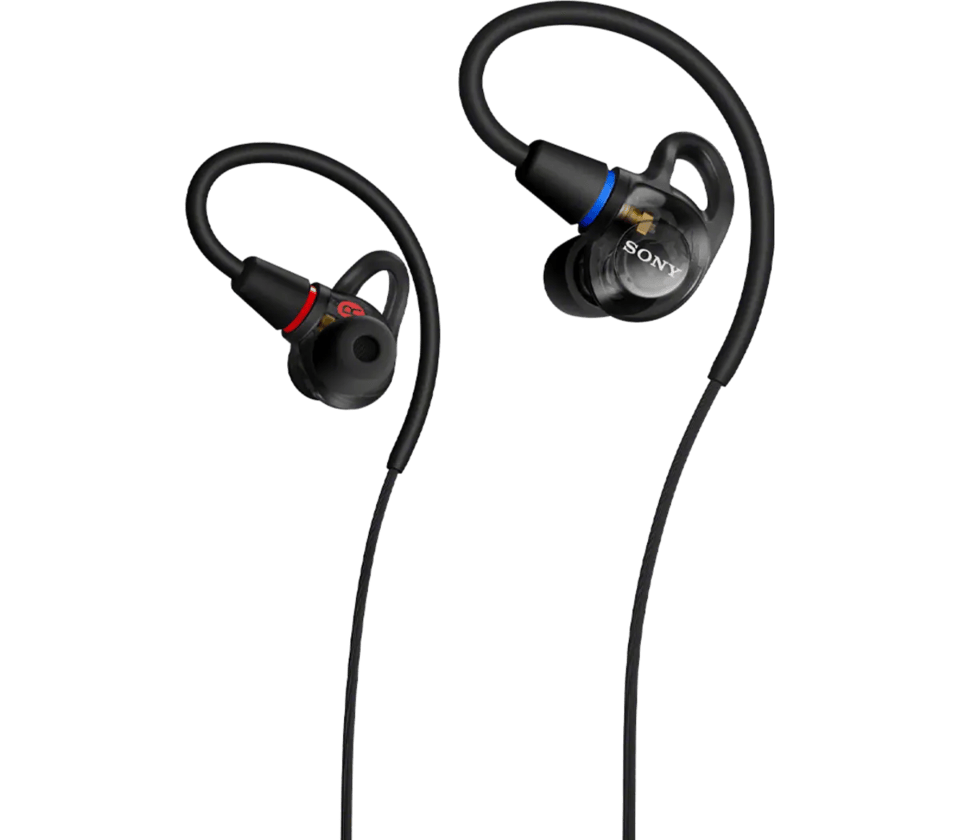
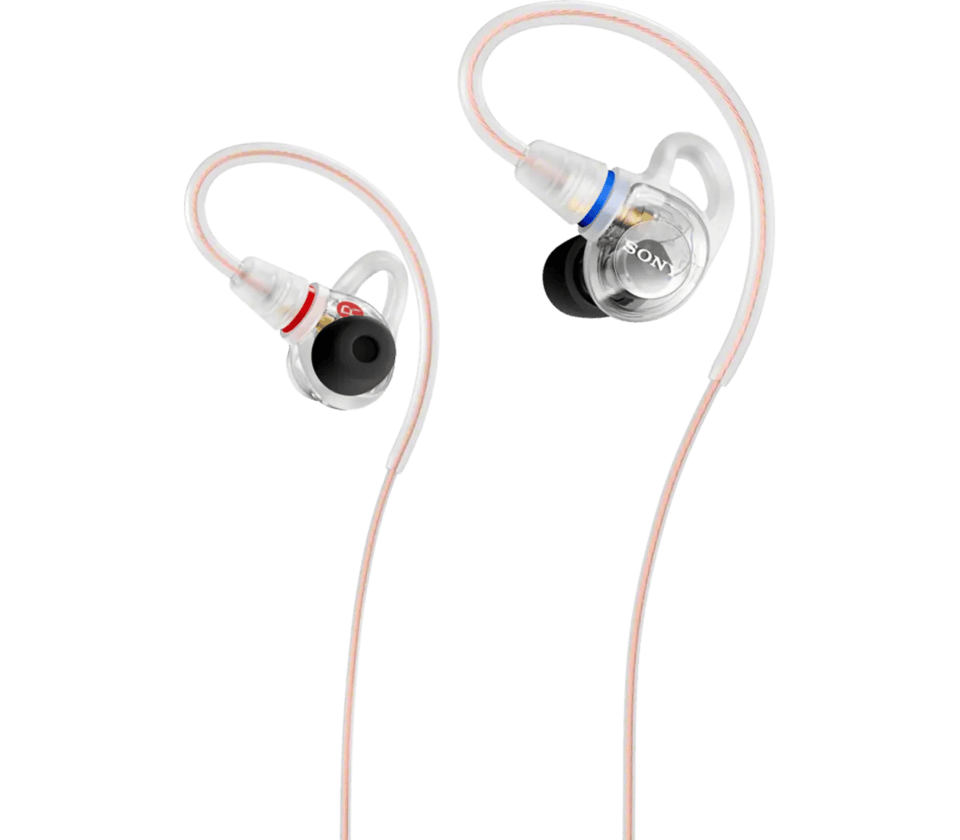
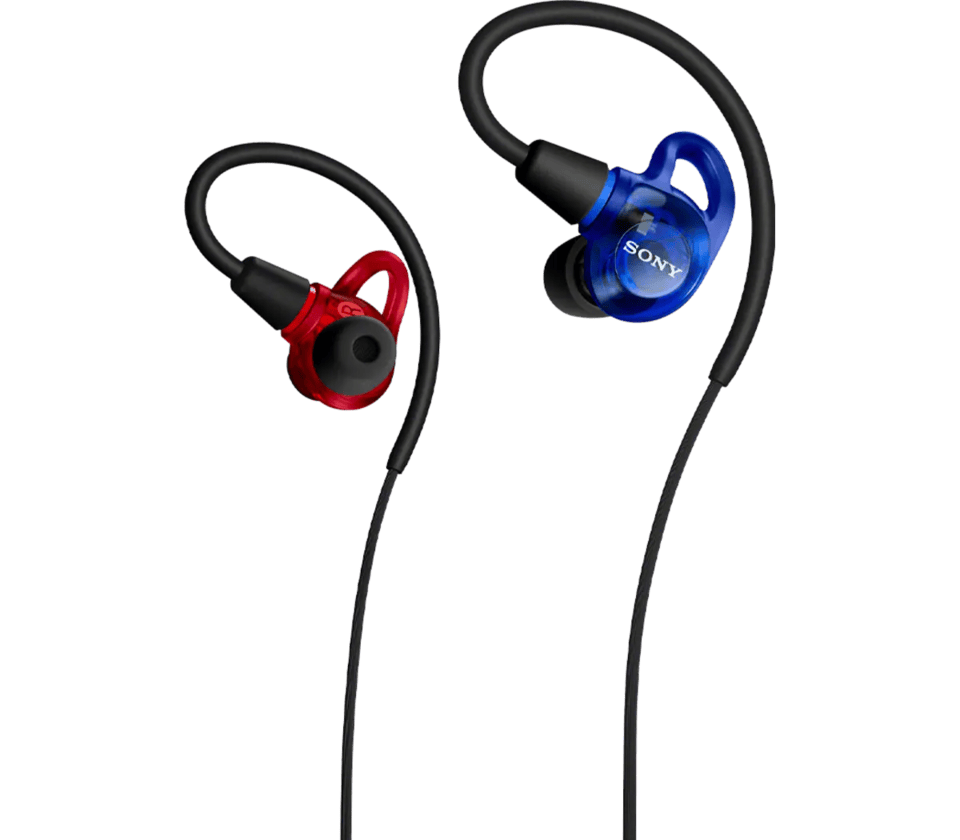
Sony IER-M500 In-Ear Monitor Review: Detailed Hands-On Experience
$119.99
The Sony IER-M500 is a professional-grade, wired in-ear monitor (IEM) designed specifically for live stage performers, musicians, and audio engineers.
It stands apart from Sony’s standard earbuds and specifically designed as a secure fit true corded passive noise isolating in-ear monitors for live performance over wireless capabilities or smart features.
What struck me most after using them was the thoughtfulness behind the design. The earphones are compact and lightweight, crafted to fit securely in the ear, while the included fitting supporters help keep them firmly in place.
In terms of specifications, the IER-M500 features a 5mm dynamic driver, 16-ohm impedance, 103 dB/mW sensitivity, and a frequency response of 10 Hz–40 kHz (which is company claimed, but human limit is up to 20 kHz).
It utilizes a fully sealed acoustic design intended to provide passive noise isolation. And, what’s overall sound an comfort?
Let’s see the full review.
Sony IER-M500 In-Ear Monitor Review
Design and Fit
The design of the IER-M500 clearly belongs to the professional-grade IEM (In-Ear Monitor) category. Unlike standard earbuds, the cable does not hang straight down! instead, it loops over the ear and towards the back. This makes it much more convenient and suitable for use while moving around.
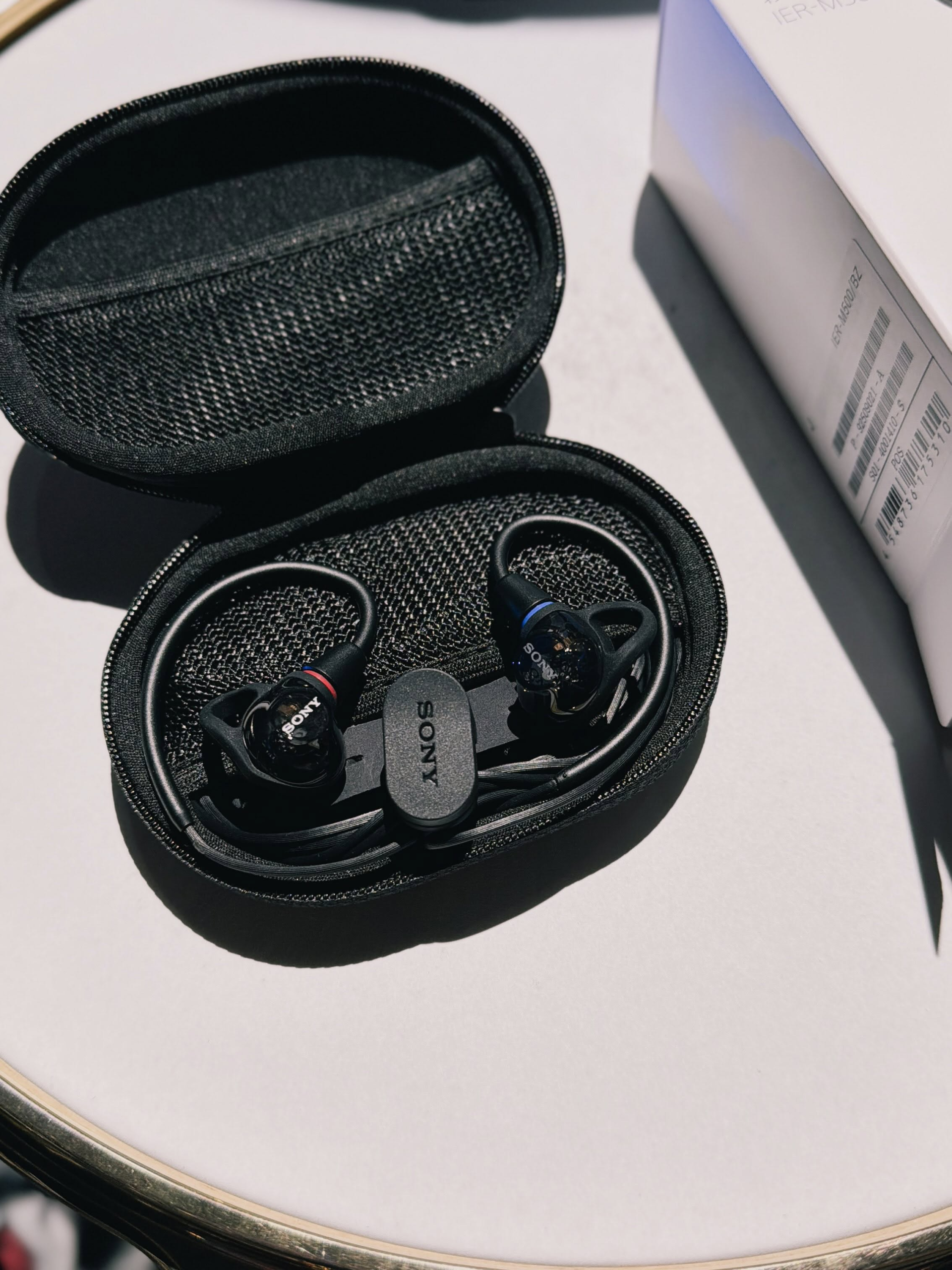
Sony IER-M500 Design & First Impression
The main units—or housings—are quite compact. I really appreciate how the ear-support structure is seamlessly integrated into the main design without making the earphones feel bulky or heavy.
The ‘fitting supporters’ play a crucial role here. Sony provides supporters in various sizes, allowing users to customize the fit according to their ear shape. Additionally, Sony recommends selecting the right size of ‘ear-tip’ to ensure a proper seal and comfort, as a poor seal can compromise bass quality.
In my experience with this type of fit, the over-ear cable routing ensures the IER-M500 stays much more secure in the ear compared to standard wired earbuds. Once properly fitted, the earphones do not slip down due to cable tension, even when moving my head.
This design is particularly useful for situations where I want to avoid the hassle of constantly readjusting the earphones.
However, fitting them does require a bit more attention than standard earbuds. Finding the right combination of ear-tip size and fitting supporter is essential. Once the correct fit is achieved, then it feels incredibly secure and stable.
Build and Cable Quality
The build suggests it was designed with professional utility in mind rather than flashy aesthetics. The housing is compact and well-molded; the unit I have features a transparent and black finish that gives it the distinct look of a dedicated IEM. The left and right sides are clearly marked, making it easy to insert them correctly; the fit is comfortable, and the material is resistant to smudges or stains.
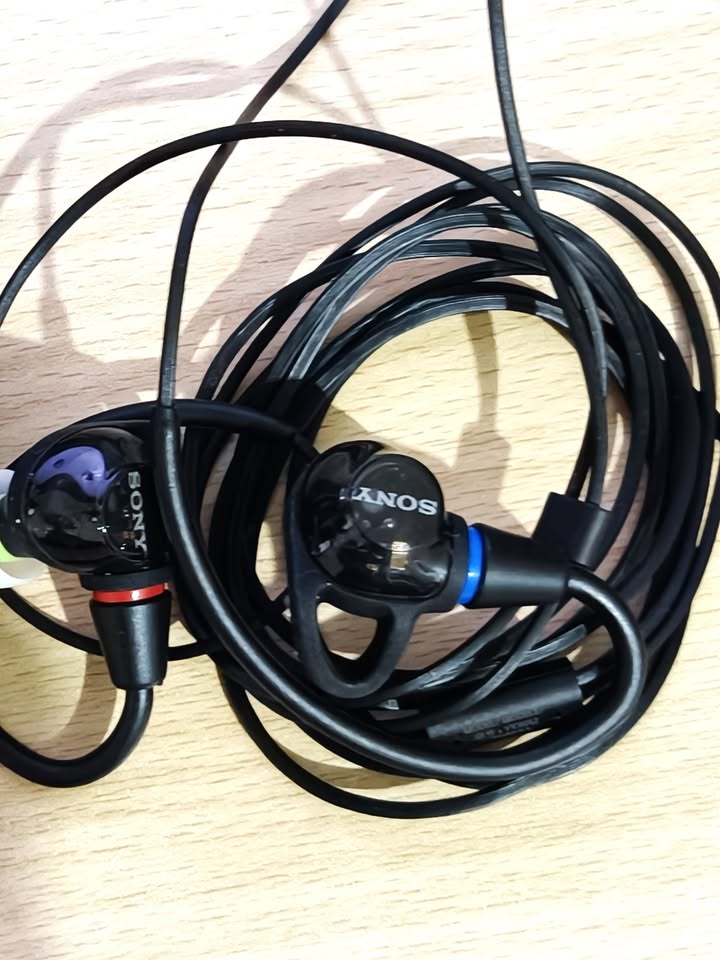
Sony IER-M500 Build and Cable | Image credit: Headset Guides
Another feature I particularly liked is the flexible section of the cable that loops over the ear. It provides just enough rigidity to hold its shape without causing discomfort or inconvenience during use. The included cable is approximately 1.6 meters long; it features a ‘Y-type’ configuration and terminates in an L-shaped 3.5mm stereo mini-plug. It also comes with a cable clip and a carrying case.
The cable itself isn’t the most luxurious or flashy part of the package. It prioritizes practicality over premium flair and wouldn’t be classified as a thick, heavy ‘audiophile-grade’ cable. However, for a professional monitoring IEM of this caliber, the design makes perfect sense: it is lightweight and easy to handle.
The L-shaped plug is another convenient feature, as it minimizes direct strain on the connection point when the source device is kept in a pocket or bag.
Sound Quality and Tuning
The overall sound of the IER-M500 earphones is one of their most appealing features. Instead of the aggressive V-shaped tuning often found in consumer-grade earphones, the IER-M500 is designed with a relatively balanced presentation suitable for monitoring. Overall, it as delivering precise and balanced sound, with a fully sealed structure that aids in maintaining isolation.
I noticed that no single frequency range dominates the sound. The bass is punchy enough to keep the music engaging, while the midrange remains clear enough to preserve the distinct characteristics of vocals and instruments. The treble adds definition to the sound without becoming the focal point of the presentation.
This balance makes the IER-M500 particularly appealing to listeners who prefer something more controlled than typical consumer earbuds.
I found the presentation relatively easy on the ears during extended listening sessions. The tuning doesn’t constantly demand attention through excessive treble or an overemphasis on the mid-bass.
This is a crucial feature for monitoring, as the goal isn’t necessarily to make every recording sound spectacular. Rather, the aim is to allow me to hear exactly what is happening in the recording with sufficient clarity to make informed judgments.
Bass Quality and Punch
Regarding bass, the IER-M500 retains Sony’s signature musicality while upholding its ‘monitoring-centric’ characteristics. Its 5mm dynamic driver does not deliver the excessively aggressive low-end or deep bass sensation often found in bass-heavy consumer earphones. Instead, the bass is well-controlled and balanced with other frequency ranges. However, it maintains sufficient ‘punch’ for kick drums and bass lines, keeping the music lively.
The quality of the ear-tip seal is particularly crucial here; without a proper seal, the impact of low frequencies diminishes significantly. Conversely, with the right fit, the bass feels much fuller and more impactful. Sony itself notes that a poor seal can weaken the bass response and recommends using larger tips if necessary.
The bass does not feel artificially boosted; rather, it establishes the song’s foundation without overpowering vocals or other instruments. In my experience, this characteristic makes these suitable for a wider range of uses beyond just stage monitoring.
Midrange and Vocals
The midrange plays a crucial role in the IER-M500’s overall sound profile, as this is where the sounds of vocals, guitars, keyboards, and various acoustic instruments—along with most of the details essential for monitoring—reside.
The vocals sound natural and are positioned correctly; they do not feel forced or aggressively projected towards the listener. I also appreciate that the IER-M500 does not rely on an exaggerated ‘upper-midrange peak’ to bring out details. Instead, it maintains a harmonious and balanced relationship between the bass, mids, and treble.
The IER-M500 is particularly enjoyable for vocal-centric tracks, as the vocals remain clear and easy to follow without being completely isolated from the accompanying instruments.
Treble and Detail
The treble prioritizes clarity over excessive brightness. It contains enough high-frequency information to give cymbals, strings, percussion, and other high-frequency elements their distinct characteristics, yet the presentation does not seem designed to produce an instantly “sparkly” sound. This makes sense given the IER-M500’s role as a monitoring tool.
I can hear intricate details in the recording without the treble constantly demanding attention. Instead, it works in tandem with the midrange to maintain transparency.
For critical listening, this restrained approach can be effective, as excessive treble energy can sometimes make an IEM sound more detailed than it actually is upon first listen.
Soundstage and Resolution
Despite being a compact single-driver IEM, the IER-M500 offers a soundstage—or spatial arrangement of sound—that I found quite impressive. While it doesn’t quite produce the expansive or speaker-like soundstage found in some open-back headphones, the listening experience never feels cramped or claustrophobic.
The soundstage and the ability to separate different sounds are so effective that the position of each instrument within the recording can be easily distinguished. This becomes particularly evident when listening to high-quality live music recordings. Instead of all sounds converging at a single point between the ears, there is a wonderful sense of left-right positioning and depth.
Considering its single dynamic driver design, the resolution—or level of sonic detail—is also excellent. Although it may not directly rival (e.g Sony IER-M9 or Sony IER-M7) Sony’s much more expensive multi-driver professional IEMs, it provides enough detail to clearly distinguish individual instruments and nuances in the recording—all without making the sound feel overly mechanical or analytical.
Independent reviews have also noted that, despite being an entry-level monitor IEM, the IER-M500 delivers a surprisingly effective soundstage; its horizontal width and clarity of positional definition are particularly noteworthy.
Passive Isolation
Passive isolation is one of the key strengths of the IER-M500. It does not feature active noise cancellation. Instead, Sony employs a fully sealed structure, noise-isolating ear tips, and an in-ear fit to reduce external noise. Sony designed this isolation system specifically for stage monitoring.
When I achieve a proper seal, the outside world becomes noticeably quieter, making it easier to focus on the music. Crucially, isolation depends largely on the fit. While the earphones themselves are capable of providing strong physical isolation, using the wrong size ear tip can significantly diminish that benefit.
For me, this is where the IER-M500’s fit system proves its worth: its goal is not merely to ensure the earphones are comfortable, but also to maintain a consistent acoustic seal.
Driveability / Source Compatibility
The IER-M500 earphones are quite easy to drive. With an impedance of 16 ohms and a sensitivity of 103 dB/mW, they do not require a powerful headphone amplifier to achieve a satisfactory listening volume.
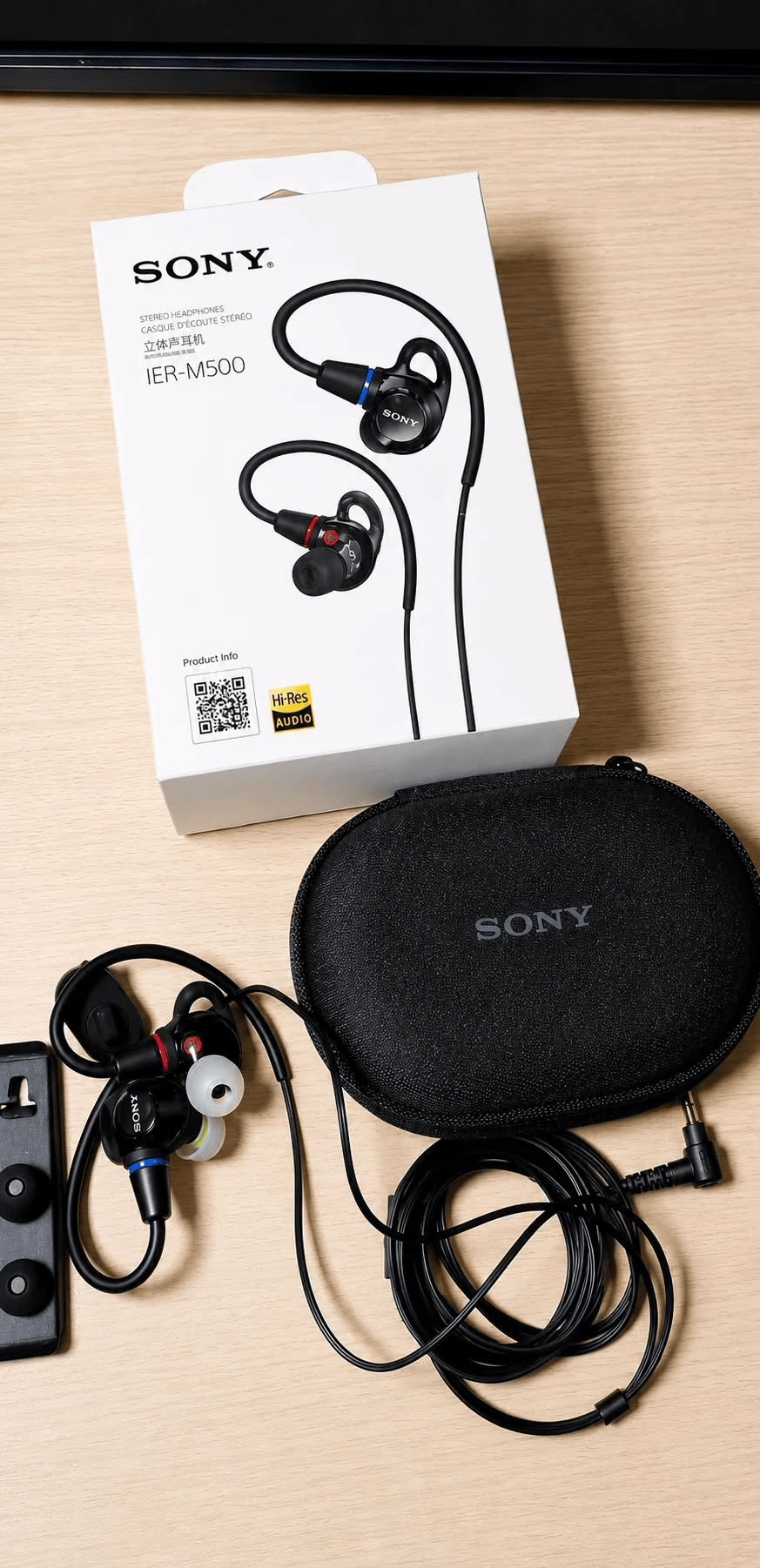
Sony IER-M500 Whats in the Box Contains
It can be used with a wide range of standard audio sources. Thanks to the 3.5mm connection, devices such as smartphones, laptops, portable music players, USB DACs, or headphone amplifiers can all serve as suitable sources.
However, if the audio source has significant background noise or poor analog output quality, using a high-quality DAC or a dedicated headphone output might be advisable.
I wouldn’t hesitate to buy the IER-M500 thinking it requires an expensive amplifier, because it simply doesn’t need one. Its low impedance and high sensitivity make it an easy-to-drive IEM.
Conclusion:
The Sony IER-M500 possesses a highly specific and distinct identity. It makes no attempt to be a trendy wireless earbud or a run-of-the-mill, bass-heavy IEM. Instead, Sony has built it around three core principles: a secure fit, effective passive noise isolation, and a controlled sound signature.
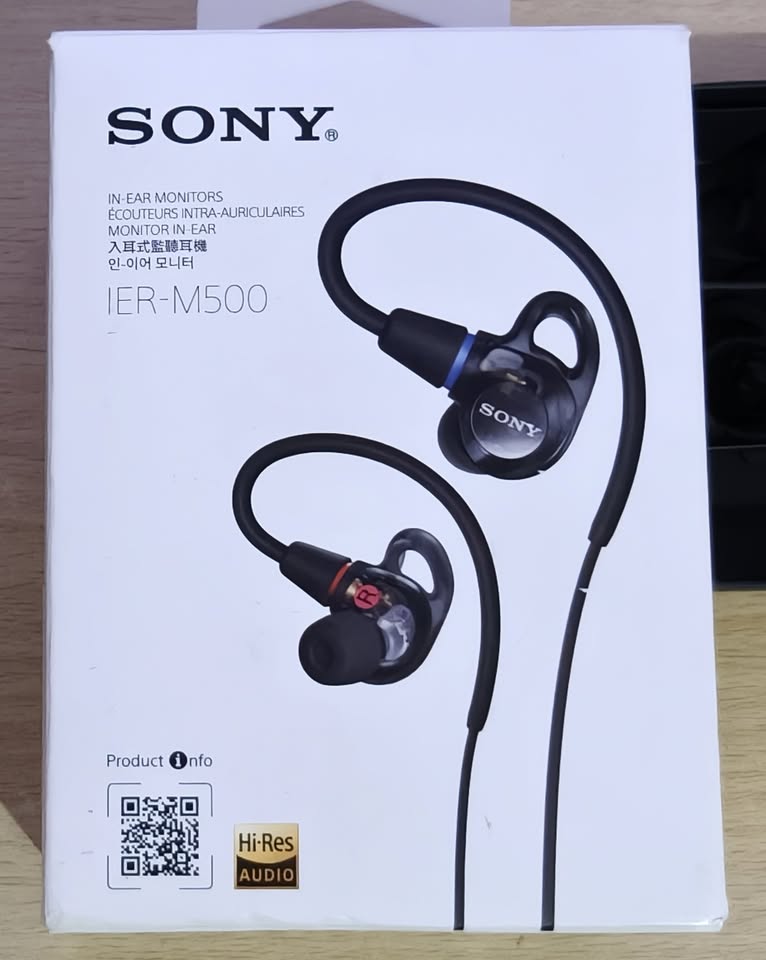
Sony IER-M500 Closed-Box
What I appreciate most is the coherence of its design. From the ergonomic support system and meticulously sealed housing to the lightweight build, cable configuration, and sound tuning—everything feels logical and highly effective for an In-Ear Monitor (IEM).
In my experience, the IER-M500 delivers an engaging yet balanced sound. It offers enough ‘bass punch’ to make listening enjoyable, while simultaneously maintaining the clarity and instrument separation expected from monitor-style earphones.
The result is an IEM that feels purpose-built rather than overly complex. It requires no apps, batteries, ANC (Active Noise Cancellation) systems, or various electronic features to perform its function. It focuses solely on providing a secure fit and delivering clear, reliable wired audio.
Specification: Sony IER-M500 In-Ear Monitor Review: Detailed Hands-On Experience
| General Specs | ||||||||||||||||||||||||||||||||||||||||||||||||||||
|---|---|---|---|---|---|---|---|---|---|---|---|---|---|---|---|---|---|---|---|---|---|---|---|---|---|---|---|---|---|---|---|---|---|---|---|---|---|---|---|---|---|---|---|---|---|---|---|---|---|---|---|---|
| ||||||||||||||||||||||||||||||||||||||||||||||||||||
| Wired Earbuds & IEMs Technical Specs | ||||||||||||||||||||||||||||||||||||||||||||||||||||
| ||||||||||||||||||||||||||||||||||||||||||||||||||||
There are no reviews yet.